Friday, December 16, 2011

Zoo Story Thomas French


What a well written and complex story.  It raises many questions that need to be reflected on for the future.  The zoos started out as terrible places in human history, torture facilities for animals that actually contributed to the destruction of wildlife. But the shift in ecological perspective in the 60’s has also shifted the zoos into the arks for endangered and disappearing life.

Here is a story of a conflicting needs:  How to help the animals, how to raise the money;  The sense of being overworked by the staff; the need to grow and get publicity to maintain the facility that is the concern of the director.  It gives great insight in to the competing demands and the social fabric of the zoo staff which is stressed throughout what should have been a time of great success.  Our non-profits are in a constant tension to do their mission and to survive in economic difficulties.  The conflicts within the zoo is a classic clash of styles and job descriptions.  But the problem with seeking dollars there is a fuzzy line that separates promotion, self-promotion, and profit taking from the mission of a non-profit.  Some very questionable decisions were made by the people in charge.

The stories are also a part of a growing dialogue that demonstrates the intelligence and the individual emotions and personality of the animals.  It brings the reader to an important point of thinking about the animals as species with rights and needs and much more than exhibits and entertainment.

There is no easy answer to the future role of zoos, but we have come to understand that they have a much more important need to fulfill now than they ever had:  Deforestation, ozone, climate change, and a burgeoning human population threatening all life forms.  It is also an expose of a non-profits and the ease by which the board made questionable and dangerous decisions. 

The animals, the people and the stories are all well told.  Kate worked at a Zoo, I do not have any reference so I cannot say whether this is a typical zoo and zoo story or not.


Welcome to the savage and surprising world of Zoo Story, an unprecedented account of the secret life of a zoo and its inhabitants, both animal and human. Based on six years of research, the book follows a handful of unforgettable characters at Tampa's Lowry Park Zoo: an alpha chimp with a weakness for blondes, a ferocious tiger who revels in Obsession perfume, and a brilliant but tyrannical CEO known as El Diablo Blanco.Zoo Story crackles with issues of global urgency: the shadow of extinction, humanity's role in the destruction or survival of other species. More than anything else, though, it's a dramatic and moving true story of seduction and betrayal, exile and loss, and the limits of freedom on an overcrowded planet - all framed inside one zoo reinventing itself for the 21st century.Thomas French, a Pulitzer Prize-winning reporter, chronicles the action with vivid power: Wild elephants soaring above the Atlantic on their way to captivity. Predators circling each other in a lethal mating dance. Primates plotting the overthrow of their king. The sweeping narrative takes the listener from the African savannah to the forests of Panama and deep into the inner workings of a place some describe as a sanctuary and others condemn as a prison.All of it comes to life in the book's four-legged characters. Zoo Story shows us how these remarkable individuals live, how some die, and what their experiences reveal about the human desire to both exalt and control nature.

Late Night on the Air, Elizabeth Hay

This Canadian novel is one I picked up on our walk around Lake Superior.  It is about a radio station in far off Yellowknife where the air ways play to the tundra and the scattered populations of white and native.  It is a place where voices become attached to a complex group of people who are far from the fame of media and pulled together around the need to broadcast.

They are a diverse group, each journey is independent, and their stories interact with one another, yet each character is richly written to avoid the normal clichés.  There is the changing darkness to light and brief summer to winter, and modern pressures on ancient communities (a pipeline). 

Each person filters the place through their personal life story and they are all transients who can only touch on the truth of Yellowknife.  There is the lure of the arctic explorer as the characters are drawn in to the true life story of a group that died trying to overwinter away from civilization and there is the canoe trip that bares their emotions and their minds in a raw and beautiful nature.

FROM ELIZABETH HAYS WEBSITE
About the book

Harry Boyd, a world-weary, washed-up television broadcaster, has returned to a small radio station in the remote reaches of the Canadian North. There, in the golden summer of 1975, he falls in love with a voice on air, though the real Dido Paris is even more than he imagined.

Dido and Harry are part of the cast of eccentric and fascinating characters, all transplants from elsewhere, who form an unlikely group at the station. Their loves and longings, their rivalries and entanglements, the stories of their pasts and what brought each of them to the North, are at the heart of the novel.

Then one summer, four of them embark upon a long canoe trip into the Barrens, a mysterious landscape of lingering ice and almost continuous light. In that wild and dynamic arctic setting (following in the steps of the legendary Englishman John Hornby, who starved to death in the Barrens in 1927), they find the balance of love shifting, much as the balance of power in the North is being changed by a proposed gas pipeline that threatens to displace Native people from their land.


Sunday, December 11, 2011

Emily Carr, Lewis DeSoto


Emily Carr is a significant artist of the NW she captured the art and story of the totem pole unlike any other artist.  Recognized as one of the most significant artists in Canada her story is told in an interesting way by DeSoto without any effort to probe and personalize the information.  He does undo some of the mythological stories that are bound to build up around an artist who was unmarried all her life and had numerous animals as constant companions.

He major works on the forests of British Columbia are where her fame can be found today, but not in her life.  It was her books that finally got her national attention and she became known as Klee Wyck as a result – a friend and associate of the NW Indians.  In fact, her record of the Indians and the Totems is essential, but her relationship to them is overrated.  Eccentricity does boil out even though DeSoto does his best to control it.

The following four paragraphs from the Epitaph chapter is an excellent summary of both Emily and the book: 

“Emily Carr’s life reads as one of these quest stories.  The naïve young girl leaves home with only one ambition, to be an artist, but she does not yet understand the true meaning of art.  She completes one task, to study in San Francisco, but finds it is not enough, and sets off again, this time for England.  There she encounters prejudice, loneliness, and isolation.  She must also sacrifice the hope of love.   A setback comes in the form of illness that temporarily ends her quest.  Once recovered, she journeys to France, and finds success when she develops a new painting style and has two of her pictures shown at the Salon.  But the success brings no immediate benefit.  The goal has not yet been achieved.

“Then the journey takes her into the deep forest, where she encounters a world that is different and mysterious.  She begins to develop as an artist, yet the world turns away from what she offers.  She gives up the fight, having sacrificed personal happiness and her youth for an unattainable goal.  The years of retreat follow.

“The benevolent helper appears in the form of Lawren Harris [one of the Group of Seven who are trying to establish a Canadian style of painting].  Like the wizards of old, he gives her the key, by indicating where the path might lie.  Once more, she journeys into the forest.  She think she has found her goal at last, in the totem pole paintings, which now bring her recognition and acceptance.  But the totem poles are only signposts.  She goes beyond them, into the true mystery, and it is there [in the trees and forest], in her spiritual transformation, that the journey reaches its conclusion.

“At the end, Emily has become a wizard herself, and her magic- in the form of paintings and books-spread outward to touch lives everywhere.  The apotheosis comes only after her death, when she is elevated into a kind of myth herself, and what was a solitary journey by one woman becomes a story for all.”


Friday, December 9, 2011

A view from the Wolf's Eye, Carolyn Peterson


This small book is Candy Peterson’s memoir.  For forty years she has accompanied her husband Rolf Peterson to Isle Royale, the magnificent rugged and wilderness island complex in Lake Superior that is one of our least visited and most natural National Parks. 

Through those forty years she has gone from supportive wife, to research assistant, to young wilderness mother, back to research, and finally as an equal partner in island life.  Candy shares insights about the wolves, stories of living in the old fishing shack with mice underneath, a gartersnake falling on her shoulders as she left the house and wind blowing behind the boards.

It is a story of simple living, adapting to the wilderness as observers and recorders who were careful not to have an impact on the land and animals they studied. You learn about their social life and the simple isolation that comes without the accoutrements of today’s urban lifestyle.

Through all of this I get the feeling of a great solo adventure and solos in the outdoor education community were always a means of self-discovery.  There is loneliness in some of the passages and a quest to find a spiritual base through Candy’s philosophical and religious musings.  The book is very personal.


The Lobster Chronicles, Linda Greenlaw


This is the second book by Linda Greenlaw, an islander and fisherman from Maine.  One of the few female lobster fisherman (her first book covered her time catching swordfish).  There is a lot of information about Lobster fishing and particularly the frustrations inherent in the challenge of small boat operations versus factory boats, changing climate conditions, and the dangers of the sea. 
This is a chronicle of her fifth year after lobsters, but the key to the book is the subtitle: Life on a very Small Island.  Here are stories of the characters that inhabit the back side of the island that holds Acadia National Park.  It is an isolated life with a diminishing population that sees the school numbers tumbling and nearing extinction.  This is a frustration that runs through the book as the author would like to have children, but in the isolation of her existence cannot even find a boyfriend (maybe someday). 
She fishes with her father, anguishes over her mother’s illness, devotes two pages to the postmistress who has engaged in the epitome of conversation – Hi.  We learn about Rita and the quirks that make people hide so that she does not see them through the windows of their home; and the various ways they try to avoid being in contact with this strange woman who seems to possess mysterious social powers.  There are the two brothers who moved to the island as handymen, but create most of their own work by the mistakes that they inevitably make.  There are conflicts with the mainlanders, territorial squabbles about fishing territory, and the threats of shipwreck and death at sea.
It is a satisfying book that feels like an exercise in spying on a small community and absorbing the stories of their existence.

Thursday, December 8, 2011

Four for Thanksgiving

Thanksgiving week was a strange holiday for me this year.  Hip replacement on Tuesday and then a stay in the hospital over the holiday gave me time to finish off some books between drugs and PT.  Here are some short summaries of those books.

I listened to This House of Sky by Ivan Doig on Audio Book and loved it.  Doig has both the experience and the language to bring live in the sagebrush plains to life.  He lost his mother early in life and moved around to a variety of places sharing their home with another wife that did not work out and his grandmother.

His dad frequented the bars too often, life was rough and rewards were few, yet you see the richness that Ivan was able to derive from life whether his dad was working cattle or sheep. 

The story is timeless and might be as true today as it would have been in the late 1800's.  Not a cowboy story, not a true pionee story, but an example of people making do with both life and location.

Live Wire by Harold Coben
Myron, the sports agent, is drawn in to intrigue by two tennis clients in a spiral that reaches the mob, rock music, drugs, murder, extortion, and ultimately, Myron's family.  It is a story that involves his normal cast of characters (who are anything but normal) - his partners a formal professional wrestling woman and a very rich partner with connections and a skill for violence.

The book is longer than necessary and I found myself drifting at times despite the thriller aspects of the book.  Myron is an interesting character to build a series around and his role as an agent connects him with fields that differ from the usual PI.

There is humor and exageration that sets a light tone even if the topics are heavy.

Brimstone, Robert Parker
I really enjoy the western series that Parker has developed.  These are the same characters as you find in Apaloosa and they are excellent personalities to play against the amoral west.

Cole and Everette make an interesting team that mixes education and violence with a black and white sense of right and wrong which basically translates to the fact that they are hired as the peace officers so what they say is right and anything in conflict with that is wrong.

The towns are filled with bold personalities - in this case a preacher and a bar owner - as well as secondary characters - their whore friend, an old Indian warrior, and a Mexican/Indian deputy.

The showdown is inevitable, it is just a matter of how long the author wants to let the interaction play out.  Simple western motif that will please any old west reader.

Muir Among the Animals, Mighetto
A 1986 collection of essays from Muirs writing that center on animals that he encounters.  Some of the essays are less compeling because they are historic and you have to remember that there are no field guides, no photographs, and very little awareness of what he is seeing among the readers who bought his work - primarily on the East Coast.

We learn about his dislike for sheep - hoofed locusts, his first nearly fatal attack at trying to get a bears attention by charging the bear, the role of bees in the mountain meadows, his adventure in Alaska with the dog Stickeen, and a variety of vignettes that honor the animals.

Other than sheep he writes with respect and lack of judgment.  Predators fare as well as the birds.  He sees the beauty that animals contribute and he specialized in becoming part of the land he was in and just observing their actions. 

It is the acceptance and respect of other species that is the theme of the book.  It is a good appeal for a higher moral value that does not place humans first in every equation. 

Tuesday, November 22, 2011

The Zahir, Paulo Coelho


There is something unusual about reading Coelho.  His books are fascinating and flow quickly, but you always feel like you are only understanding a portion of the message, that the author has hidden all kinds of deep meanings and pathways within the content and I am never quite smart enough to find all the elements of the story.

He writes like he is possessed with an inspiration and like his characters each is taking a pilgrimage through the words that he uses.  The story involves a writer who finds success only because his wife-mate pushes him to do what he has spent a life time procrastinating about.

“I was always joining and leaving different groups and fraternities, always thinking that I had finally met the person who could reveal to me the mysteries of the invisible world, but in the end I was always disappointed to discover that most of these people, however well-intentioned, were merely following this or that dogma and tended to be fanatics, because fanaticism is the only way to put an end to the doubts that constantly trouble the human soul.”

But of course as the writer finds his success he forgets that his wife also has her own path to follow and he makes the fatal assumption that his success will be hers too and that she will be his sidekick.  However, she is too probing, too dynamic and too curious about life to be a sidekick.

“I don’t know if everyone is unhappy.  I know they’re all busy: work overtime, worrying about their children, their husband, their career, their degree, what they’re going to do tomorrow, what they need to buy, what they need to have in order not to feel inferior, etc.  Very few people actually say to me: ‘I’m unhappy.’  Most say: ‘I’m fine, I’ve got everything I ever wanted.’  Then I ask: ‘What makes you happy?’ Anser: ‘I’ve got everything a person could possibly want- a family, a home, work, good health.’  I ask again:  ‘Have you ever stopped to wonder if that’s all there is to life?’  Answer: ‘Yes, that’s all there is.’  I insist: ‘So the meaning of life is work, family, children who will grow up and leave you, a wife or husband who will become more like a friend than a real lover.  And, of course, one day your work will end too.  What will you do when that happens?’  Answer: There is no answer.  They change the subject.”

His life was carefree – money worries gone, fame an escape from reality.  “I had always sought both adventure and security, knowing that the two things did not really mix. I was sure of my love for Esther and yet I easily fell in love with the other women, merely because the game of seduction is the most interesting game in the world.”

She can accept his infidelity and engages in it herself, but she chooses to disappear, to find her own path and her own answers.  And she does this with no good bye, just gone.  For a while he is suspected of murdering her.  But this creates the obsession (the zahir) that dominates his thoughts and feelings.

Sometimes sentences jump off the page, not because of the story, but because they say so much.  “…but we always know we are close to our true mission on earth when what we are doing is touched with the energy of enthusiasm.”

The story is about purging the past, the things that hold us back – “They are prisoners of their own personal history. Everyone believes that the main aim in life is to follow a plan.  They never ask if that plan is theirs or if it was created by another person.  They accumulate experiences, memories, things, other people’s ideas, and it is more than they can possibly cope with.  And that is why they forget their dreams.”

He searches for her, but he is looking for an intangible reason, not a person and once again the journey is about discovering himself. 

“I had discovered that I was much better and more capable than I myself had thought; age only slows down those who never had the courage to walk at their own pace.”

Monday, November 21, 2011

Your Inner Fish, Neil Shubin


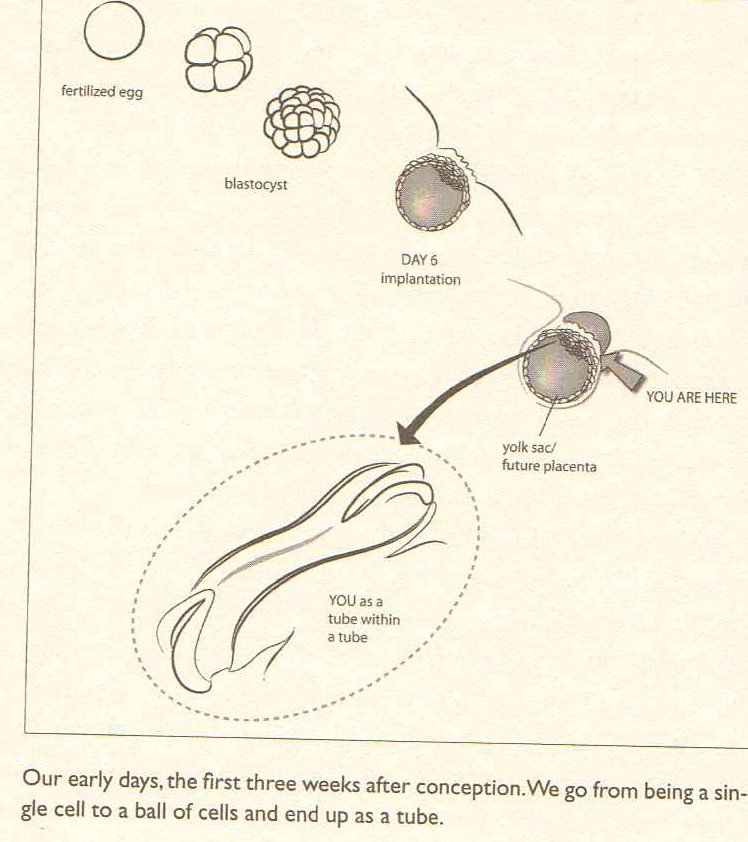
The paleontologist author is an expert on fish fossils and he uses this specialty to help us discover the evolutionary shift from water to land animals – from fish to humans.  It is a good story and well told. 375,000,000 years ago a primitive fish not only developed lungs, but also the bony structure that leads from species to species to the arms and legs of future reptiles, amphibians, birds, and mammals. Quite a journey.

This book is a study of human anatomy and the way that it connects us to the rest of the natural world.  It is important to recognize how we have found genes in everything from the single cell to our closest species partners that have helped us to understand the cures to diseases, have helped us find ways to benefit future generations and to look for new ways to research medicine and future treatments.  It is a compelling look at the natural world and it reminds me of what we would miss if we allow the loud mouths who deny evolution to set back science with their primitive views.

Below are some key graphics and stories from the book.


“Unlike fish and amphibians, our knees and elbows face in opposite directions.  This feature is critical: think of trying to walk with your kneedcap facing backward.  A very differeent situation exists in fish like Eusthenopteron where the equivalents of our knees and elbow face largely in the same direction.  We start development with little limbs oriented much like those in Eusthenopteron, with elbows and knees facing in the same direction.  As we grow in the womb, our knees and elbows rotate to give us athe state of affairs we see in humans today.

“Our bipedal pattern of walking uses the movements of our hips, knees, ankles, and foot bones to propel us forward in an upright stance unlike spawled posture of creatures like Tiktaalik.  One big difference is the position of our hips.  Our legs do not project sideways like those of a crocodile, amphibian or fish; rather, they project underneath our bodies.  This change in posture came about by changes to the hip joint, pelvis, and upper leg: our pelvis became bowl shaped, our hip socket became deep, our femur gained its distinctive neck, the feature that enables it to project under the body rather than to the side.”


The development of the fetus is really intriguing as the gill structure (arches) are consistent with the shark (and many other animals).  They become gills in the shark, but develop other important organs (natural biological genetic engineering) in the human.

The mapping of these elements is amazing and this book continues to relate fossils to present as well as moving across species from single cells through mammals.


Friday, November 18, 2011

Listen For the Silence, Clem Nagel


A small book of poetry that is focused on the lessons and inspirations of nature by one of the supporters of Springbrook Nature Center.


This description of Clem was on the web – for Friday night reading series,
“Clem Nagel lives in Fridley and calls himself a “poet-come-lately”. He began writing poetry twelve years ago, when his poetry simply “showed up.” He nurtures his abiding interests in human behavior, spirituality, travel, and social justice – all of which are an inseparable part of his writing. He is author of Prairie Sky, Prairie Ground (2008) and Listen for the Silence: A Walk Through the Natural World (2009). His poems have appeared in The Kingfisher, The National Catholic Reporter, Patch for Peace, Labyrinth Pathways, Presence, and others. Clem has a love of teaching others to be attentive to the miracles of the natural world and to discover their own poetic voice. He teaches at The Loft Literary Center. Clem shares his long-time interests of nature and travel with his writer/photographer spouse, Elizabeth who also teaches at the Loft and is author of Waiting for the Heat to Pass (2009). Recently, they collaborated with the Twin City-based NUBE Ensemble in writing the poetic text for the musical group’s touring production of The Golden Bird.”

“what if I lived where people plant
      Ground covers of tar and concrete
And cut down trees that touch roofs,
               Where children frolic on chemical
Lawns and never pick dandelions?”

“Does
The sum total
Of spider-spun
Gossamer –
Keep morning plants
From moving in the
Breeze?”


Marsh Frogs

Early spring emerges like
Easter sunrises –

A small fog’s breath
Hangs in the air.
Fingers of warm sun energy
Penetrate the muck, felt

By small waiting things.
Frozen marsh frogs thaw,
Their hesitant voices swell as

Muted notes of distant birds
thread their way
through the red of
budding soft maples

An unleashed chorus
floods the universe.


Sandpipers run, stop, and
balance on the footprints of
their water-mirrored selves.